
One moment you’re enjoying a scoop of ice cream or sipping your morning coffee, and the next, a sudden sharp pain shoots through your tooth. Tooth sensitivity can turn everyday pleasures into uncomfortable experiences and often signals that the protective layers of your teeth need attention.
Sensitive teeth affect millions of people worldwide and can occur at any age. While the discomfort may be temporary, it should never be ignored. In many cases, tooth sensitivity is an early warning sign of enamel erosion, gum recession, tooth decay, or other dental concerns. The good news is that once the cause is identified, effective treatments are available to provide lasting relief.
What Causes Tooth Sensitivity?
Tooth sensitivity, also known as dentin hypersensitivity, occurs when the protective layers of the tooth become compromised, exposing the dentin underneath. Dentin contains thousands of microscopic channels that connect directly to the nerve center of the tooth. When hot, cold, sweet, acidic foods or even cold air reach these channels, the nerves become stimulated, resulting in a sudden sharp sensation.
Did You Know?
Research suggests that tooth sensitivity affects a significant portion of adults at some point in their lives, making it one of the most common dental complaints worldwide. Early intervention can help prevent minor sensitivity from progressing into more serious dental problems.
Several factors can expose dentin and trigger sensitivity, and many people experience more than one contributing cause at the same time.
Common Causes of Tooth Sensitivity
| Cause | How It Leads to Sensitivity |
|---|---|
| Enamel Erosion | Thins the tooth’s protective outer layer, exposing dentin |
| Gum Recession | Exposes sensitive tooth roots that lack enamel protection |
| Tooth Decay | Creates openings that allow stimuli to reach nerves |
| Cracked Teeth | Exposes inner tooth structures and nerves |
| Teeth Grinding (Bruxism) | Gradually wears down enamel |
| Aggressive Brushing | Damages enamel and gums |
| Recent Dental Procedures | May temporarily irritate tooth nerves |
| Acidic Foods and Drinks | Contribute to enamel erosion over time |
Enamel erosion often develops gradually due to frequent consumption of acidic foods and beverages. Gum recession may occur as a result of aging, periodontal disease, or brushing too aggressively. Teeth grinding, often occurring during sleep, can slowly wear away enamel without the individual realizing it.
What Do Sensitive Teeth Feel Like?
Sensitive teeth typically cause a sudden, sharp, temporary pain triggered by specific activities. Unlike a persistent toothache, sensitivity usually appears quickly and disappears once the trigger is removed.
Many individuals notice discomfort while drinking cold beverages, eating ice cream, consuming hot soup, brushing their teeth, or eating sweet and acidic foods. Some people even experience pain when breathing cold air through their mouth.
The intensity can vary significantly. For some, it feels like a mild twinge, while others describe it as an intense electric shock-like sensation that interrupts eating, drinking, or daily routines.
| Trigger | Typical Sensation |
|---|---|
| Ice Cream | Sharp cold pain |
| Hot Coffee | Sudden heat sensitivity |
| Sweet Foods | Brief tingling or discomfort |
| Citrus Fruits | Stinging sensation |
| Cold Air | Quick shooting pain |
| Brushing Teeth | Localized sensitivity near gums |
Quick Self-Check: What Might Be Causing Your Sensitivity?
The location and timing of sensitivity can often provide clues about the underlying problem.
| What You Experience | Possible Cause |
|---|---|
| Pain when eating ice cream | Enamel erosion or exposed dentin |
| Sensitivity near the gum line | Gum recession |
| Pain while chewing | Cracked tooth or cavity |
| Sensitivity after whitening | Temporary enamel irritation |
| Lingering pain after hot drinks | Possible pulp inflammation |
| Multiple sensitive teeth | Teeth grinding or acidic diet |
While this self-check can be helpful, only a dental examination can determine the exact cause.
Myth vs Fact: Understanding Tooth Sensitivity
Many misconceptions prevent people from seeking timely treatment.
| Myth | Fact |
|---|---|
| Sensitive teeth are a normal part of aging | Sensitivity often indicates an underlying dental issue |
| Brushing harder cleans better | Aggressive brushing can worsen sensitivity |
| Sensitivity always means a cavity | Many causes exist, including gum recession and grinding |
| Sensitive teeth cannot be treated | Most cases improve significantly with proper care |
| Avoiding cold foods solves the problem | The underlying cause still requires attention |
How to Treat Tooth Sensitivity?
The most effective treatment depends on the underlying cause. Once the source of irritation is identified, treatment can often provide substantial relief.
Dentists commonly recommend desensitizing toothpaste, which contains ingredients that help block pain signals traveling from the tooth surface to the nerve. Regular use over several weeks often leads to noticeable improvement.
Professional fluoride treatments can strengthen weakened enamel and reduce sensitivity. Dental bonding materials may be applied to cover exposed root surfaces, while severe gum recession may require a gum graft procedure. For cases involving nerve damage or infection, root canal therapy may be necessary.
Treatment Options for Sensitive Teeth
| Treatment | Purpose |
|---|---|
| Desensitizing Toothpaste | Reduces nerve response |
| Fluoride Treatment | Strengthens enamel |
| Dental Bonding | Covers exposed roots |
| Night Guard | Prevents grinding-related wear |
| Gum Graft | Treats severe gum recession |
| Root Canal Therapy | Used for severe nerve-related sensitivity |
Why Early Treatment Matters
Ignoring tooth sensitivity can allow minor problems to progress into more serious conditions. Enamel erosion may continue to expose deeper tooth layers, while untreated gum recession can leave tooth roots increasingly vulnerable.
Seeking treatment early often means simpler, less invasive solutions and helps preserve long-term oral health.
What Causes Tooth Sensitivity to Hot and Cold?
Hot and cold sensitivity is usually caused by exposed dentin. Temperature changes create movement within the fluid inside the dentinal tubules. This movement stimulates the nerves inside the tooth and triggers pain.
Common contributors include enamel erosion, gum recession, cracked teeth, worn fillings, and untreated cavities.
If discomfort lingers for several seconds or minutes after exposure to hot or cold foods, it may indicate inflammation or infection within the tooth pulp and should be evaluated by a dentist promptly.
Common Hot and Cold Sensitivity Triggers
| Hot Triggers | Cold Triggers |
|---|---|
| Tea | Ice Water |
| Coffee | Ice Cream |
| Soup | Cold Soft Drinks |
| Hot Meals | Frozen Desserts |
| Warm Desserts | Chilled Foods |
Home Remedies for Tooth Sensitivity
While professional dental care remains the most effective approach for persistent sensitivity, several home-care strategies can help reduce discomfort.
Using a toothpaste formulated for sensitive teeth can help block pain signals from reaching the nerves. Switching to a soft-bristled toothbrush protects enamel and reduces irritation near the gum line. Warm saltwater rinses may support gum health and reduce inflammation.
Limiting acidic foods and beverages such as citrus fruits, sports drinks, soda, and vinegar-based products can help slow enamel erosion. Staying well hydrated also promotes saliva production, which naturally protects teeth from acid damage.
Home Care Measures and Benefits
| Home Remedy | Potential Benefit |
|---|---|
| Sensitive Toothpaste | Blocks pain transmission |
| Soft Toothbrush | Prevents enamel damage |
| Saltwater Rinse | Supports gum health |
| Reduced Acid Intake | Protects enamel |
| Daily Flossing | Prevents gum disease |
| Adequate Hydration | Supports oral health |
When Tooth Sensitivity May Signal a Serious Problem
Not all sensitivity is harmless. In some cases, it may indicate a deeper dental issue requiring prompt treatment.
| Warning Sign | Why It Matters |
|---|---|
| Persistent tooth pain | May indicate nerve inflammation |
| Swelling of gums or face | Possible infection |
| Fever | May signal a spreading infection |
| Visible tooth cracks | Exposes deeper tooth structures |
| Pain after hot or cold exposure | Possible pulp damage |
| Severe pain while chewing | May indicate advanced decay or fracture |
If you experience any of these symptoms, seek professional dental care as soon as possible.
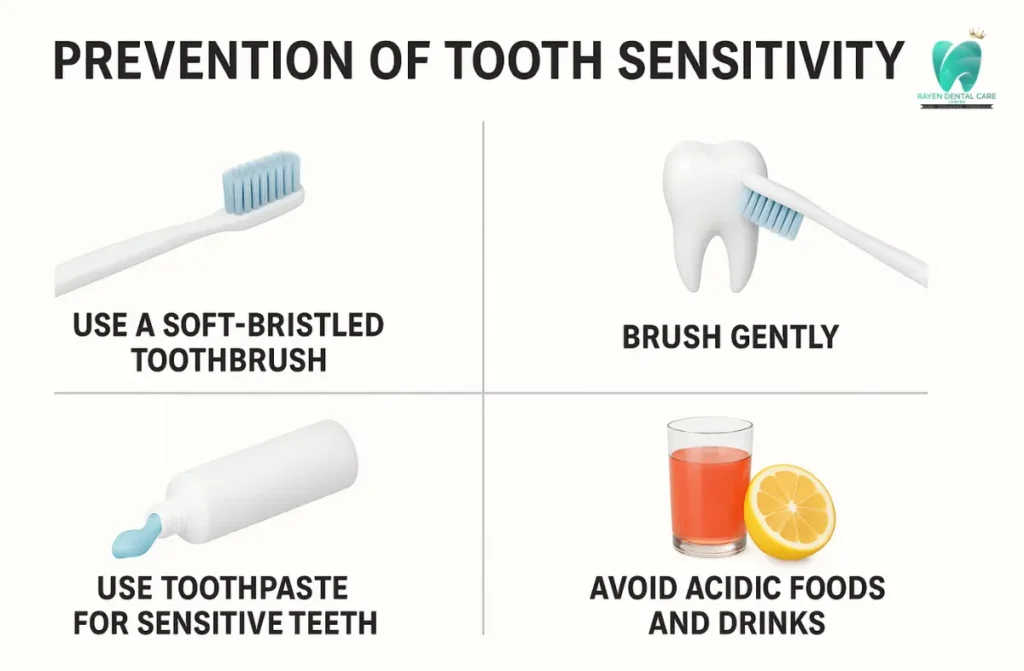
Prevention of Tooth Sensitivity
Preventing sensitivity is often easier than treating it. Daily habits play a major role in maintaining strong enamel and healthy gums.
Brushing gently with fluoride toothpaste, limiting acidic foods and beverages, and wearing a night guard if you grind your teeth can significantly reduce your risk. Regular dental checkups help identify enamel wear, gum disease, and cavities before they become serious.
Individuals who frequently consume acidic drinks may benefit from using a straw and rinsing with water afterward to minimize acid exposure.
Quick Tip: How to Brush Your Teeth Correctly
Many people believe brushing harder results in cleaner teeth. In reality, excessive force can wear away enamel and contribute to gum recession, two leading causes of tooth sensitivity.
Hold your toothbrush at a 45-degree angle toward the gum line and use small, gentle circular motions rather than vigorous scrubbing. Brush for approximately two minutes twice daily and replace your toothbrush every three to four months or sooner if the bristles become frayed.
| Brushing Habit | Impact on Tooth Sensitivity |
|---|---|
| Gentle circular motions | Protects enamel and gums |
| Soft-bristled toothbrush | Minimizes abrasion |
| Brushing twice daily | Removes plaque buildup |
| Brushing too hard | Increases enamel wear |
| Hard-bristled brush | Can contribute to gum recession |
| Replacing toothbrush regularly | Maintains effective cleaning |
Conclusion
Tooth sensitivity is more than a brief moment of discomfort—it is often your body’s way of warning you that the protective barriers of your teeth are under stress. Whether the cause is enamel erosion, gum recession, tooth decay, grinding, or dietary habits, identifying the source early is the key to effective treatment.
The encouraging news is that most cases of sensitivity can be successfully managed with the right combination of professional dental care and healthy daily habits. By taking action early, you can protect your enamel, preserve your gums, and prevent minor sensitivity from developing into a more serious dental problem.
Don’t let a sharp twinge become a long-term issue. Addressing tooth sensitivity today can help you enjoy every meal, drink, and smile with confidence tomorrow.
Read Also: Antibiotics for Tooth Infection


