

✔ Medically Reviewed
Reviewed by Dr. Roshan Rayen , BDS, MDS — Chief Dentist, Rayen Dental Care Centre, Chennai
Registration number 5051
25 years of postgraduate clinical experience in pediatric dentistry and orthodontics
Does your child snore, sleep with their mouth open, or wake up tired even after a full night’s rest? Parents often chalk this up to “just a phase,” but it can point to something more specific: an airway problem that’s affecting how well your child breathes while they sleep.
This is where airway focused orthodontics comes in. Rather than treating crooked teeth in isolation, this approach looks at the whole picture — jaw growth, facial development, and the airway itself — to help children breathe, sleep, and grow the way they should. Starting early airway orthodontic treatment while the jaw is still developing tends to produce the smoothest, most lasting results. Here’s what it involves, why early treatment matters, and the top benefits parents in Chennai should know about.
What is Airway Focused Orthodontics?
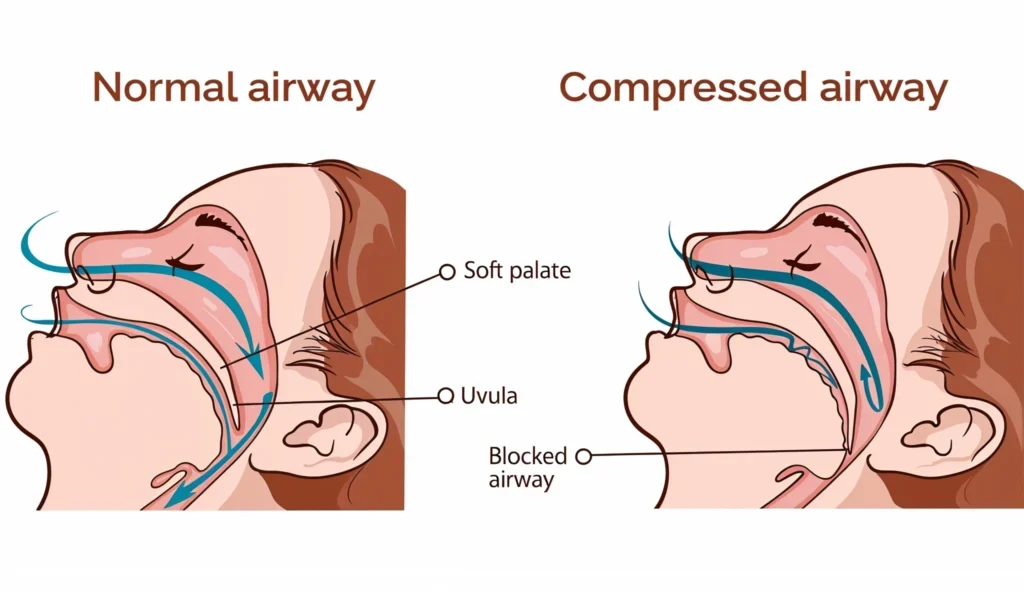
Airway focused orthodontics is a branch of dental care that goes beyond straightening teeth. Its main goal is to keep a child’s airway open and functional, particularly the space behind the nose and throat where air travels during breathing and sleep.
Traditional braces are designed to correct alignment and bite. Airway focused treatment asks a different question first: is the jaw growing in a way that supports easy breathing? If the answer is no, correcting that early — while a child’s bones are still developing — tends to produce far better long-term results than waiting until adulthood.
How It Differs From Traditional Orthodontics
| Traditional Orthodontics | Airway-Focused Approach |
| Focuses on tooth alignment and bite | Focuses on jaw growth, breathing, and airway space |
| Usually starts in the early teens | Can start as early as age 2–3 if symptoms appear |
| Treats the smile | Treats the smile and screens for sleep/breathing issues |
Recognizing Airway Problems Early: Signs to Watch For
Airway issues in children don’t always look dramatic. Often, they show up as everyday habits parents don’t think twice about — until they add up. Common signs include:
- Loud or frequent snoring
- Mouth breathing, whether awake or asleep
- Gasping, choking, or coughing during sleep
- Bedwetting past age 6
- Difficulty focusing or sitting still at school
- Mood swings or irritability that seem out of proportion
- Daytime tiredness despite a full night’s sleep
If a few of these sound familiar, it’s worth having your child evaluated by a pediatric dentist trained in airway screening. Many parents first start researching airway focused orthodontics for snoring after realizing it’s happening almost every night, not just when their child has a cold.
What Causes Sleep Apnea and Airway Issues in Children?
Pediatric obstructive sleep apnea — repeated pauses in breathing during sleep — is more common than most parents realize, and it’s rarely caused by just one thing. Contributing factors typically include:
- Enlarged tonsils or adenoids, which physically narrow the airway
- Chronic allergies or nasal congestion, forcing mouth breathing
- A narrow or underdeveloped jaw, which leaves less room for the tongue and airway
- Excess weight, which can add pressure on the airway during sleep
- Weak tongue posture or low oral muscle tone, letting the tongue fall back at night
Because so many of these factors trace back to jaw and facial growth, airway focused orthodontics treats the underlying structure rather than just managing the symptoms.
How Airway Focused Orthodontics Helps With Sleep Apnea
When a child’s jaw is narrow or their teeth are crowded, the airway behind it often is too. That narrowing is what leads to snoring, restless sleep, and in more serious cases, diagnosed sleep apnea. This is one of the main reasons specialists recommend airway focused orthodontics for sleep apnea in children with a structurally narrow airway, rather than relying on symptom management alone.
Our approach at Rayen’s Dental Clinic starts with a proper diagnostic workup — not guesswork. We use tools like 3D imaging and, where needed, coordinate sleep apnea evaluations to understand exactly where the airway is restricted. From there, treatment is built around widening the jaw, retraining oral muscles, and guiding growth in the right direction — so the airway has room to develop naturally.
Top 5 Benefits of Early Airway Focused Orthodontics
1. Better Sleep Quality
Widening a narrow airway reduces snoring, night waking, and gasping episodes, helping children reach deeper, more restorative stages of sleep.
2. Improved Facial and Jaw Growth
Early guidance helps the jaw develop with adequate width and forward growth, reducing the crowding and narrow-arch patterns that often need correcting later.
3. Fewer or Simpler Orthodontic Treatments Later
When jaw growth is guided early, many children need less extensive — or no — orthodontic work in their teenage years.
4. Better Focus, Mood, and Energy During the Day
Poor sleep affects behavior and concentration. Parents frequently report improved attention span and fewer mood swings once breathing improves.
5. Lower Risk of Long-Term Health Issues
Untreated pediatric airway problems have been linked to elevated blood pressure and slower growth patterns. Addressing the airway early helps prevent these downstream effects.

Treatment Options Available at Rayen’s Dental Clinic, Chennai
Airway focused orthodontics for children usually begins with a full diagnostic evaluation before any appliance is recommended, since every child’s airway issue looks a little different. Options we offer include:
- Palatal expanders — widen the upper jaw to create more airway space
- Myofunctional therapy — retrains tongue posture and oral muscle function
- Clear aligners or braces — corrects bite and tooth position as part of a broader airway plan
- Habit correction appliances — helps children stop thumb-sucking or chronic mouth breathing
- Laser soft-tissue treatment — addresses restrictive tissue (e.g., tongue-tie) where relevant
- 3D imaging and sleep evaluations — confirms diagnosis before treatment begins
As part of our Airway Dentistry & ENT and Orthodontics & Aligners programs, Dr. Roshan Rayen works with families to build a plan around the child’s specific growth pattern and symptoms.
Is This Only for Children? What About Adults?
Early treatment offers the most flexibility because a child’s jaw is still growing, but the airway doesn’t stop mattering once growth is complete. Airway focused orthodontics for adults is also possible, and it’s worth exploring if you or your partner deal with chronic snoring, frequent daytime fatigue, or mild sleep apnea that hasn’t been fully addressed.
Adult treatment looks a little different since the jawbone is no longer growing. Rather than guiding growth, it typically focuses on airway-friendly jaw expansion, oral appliances, and myofunctional therapy to improve tongue posture and airway function. If this sounds relevant to you, our Adult Obstructive Sleep Apnea page covers adult-specific options in more detail.
When Should You Bring Your Child In?
You don’t need to wait for a full set of permanent teeth to have this evaluated. Because jaw growth is most responsive between early childhood and puberty, even a toddler as young as 2–3 years old can be screened if they snore, breathe through their mouth, or seem to sleep poorly.
The earlier an airway issue is caught, the more treatment options are available — and the less invasive they tend to be.
The Bottom Line
Airway focused orthodontics isn’t just about a straighter smile — it’s about making sure your child can breathe freely, sleep deeply, and grow the way they’re meant to. If your child snores, breathes through their mouth, or seems unusually tired during the day, it’s worth having their airway checked rather than waiting to see if they “grow out of it.”
Book a consultation with Dr. Roshan Rayen to have your child’s airway and jaw growth evaluated.
Read also: Impact of Mouth Breathing on Oral Health in Children


