

✔ Medically Reviewed
Reviewed by Dr. Roshan Rayen , BDS, MDS — Chief Dentist, Rayen Dental Care Centre, Chennai
Registration number 5051
25 years of postgraduate clinical experience in pediatric dentistry and orthodontics
Tooth pain is one of the most common complaints dentists see, and it’s usually traced to cavities, infections, gum disease, or a cracked tooth. But a growing number of patients come in with sore teeth, jaw tightness, or unexplained sensitivity — and an X-ray that shows nothing wrong. In many of these cases, the real culprit is stress.
So, can stress cause tooth pain? Yes — emotional and psychological strain doesn’t stay in your head — it shows up in your jaw muscles, your bite, and even your gum tissue. Left unaddressed, this kind of discomfort can quietly get worse over time, which is why it’s worth understanding how the two are connected and when it’s time to see a dentist.
How Stress Turns Into Tooth Pain
Many patients ask can stress cause tooth pain even when there’s no visible cavity or infection on the X-ray. When you’re under stress, your body shifts into a “fight or flight” state. Muscles tighten — including the ones in your jaw and face — and inflammation rises throughout the body. That combination alone can produce a dull, aching sensation that feels a lot like a toothache, even without any decay or infection present.
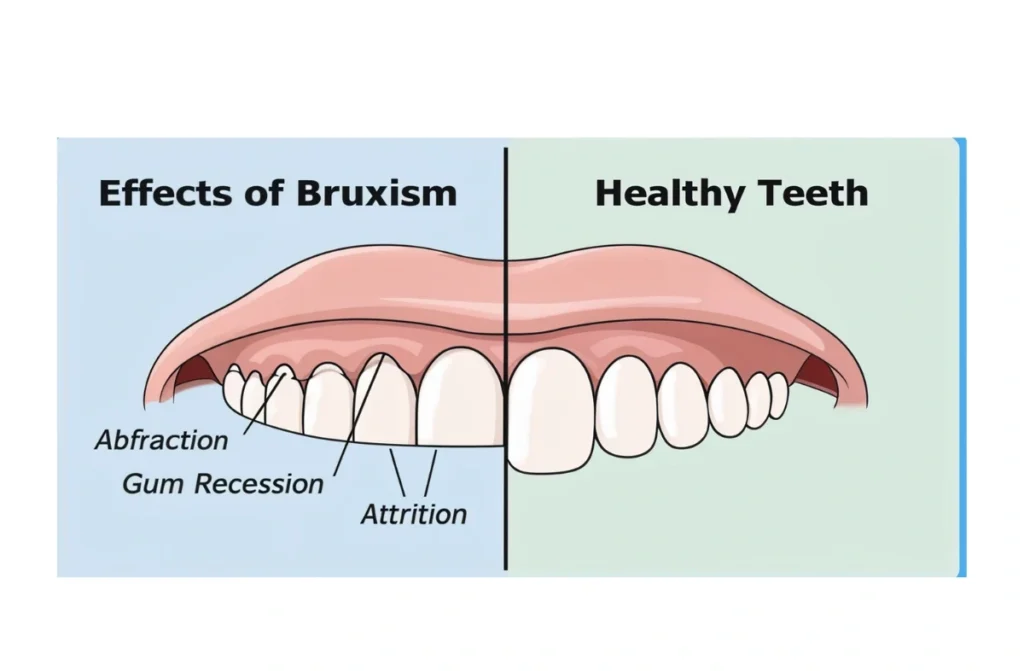
Stress also drives habits people don’t always notice in themselves, like clenching the jaw or grinding the teeth (a condition called bruxism). These habits put real mechanical pressure on your teeth, and that pressure is what most patients are actually feeling when they describe “stress toothaches.” In some cases the discomfort is better described as psychosomatic tooth pain — a real, physical sensation with an emotional trigger, rather than a structural problem.
The tell-tale sign of stress-related pain is that it tends to come and go with your emotional state: worse during a stressful week, easing off when things calm down, and often paired with jaw stiffness or facial tension. That said, self-diagnosing is risky — the only way to be sure is a proper dental exam.
Common Non-Stress Causes Worth Ruling Out First
If you’re still wondering can stress cause tooth pain in your specific case, the answer usually depends on ruling everything else out first. Before pinning discomfort on stress, a dentist will typically check for:
- Tooth decay and cavities
- Gum infections or periodontal disease
- Cracked or fractured teeth
- Enamel wear and sensitivity
- Impacted wisdom teeth
- Jaw disorders unrelated to stress
Because these overlap heavily in symptoms, a full exam is the only reliable way to tell them apart.
The Bigger Picture: How Stress Affects Your Oral Health
Stress doesn’t just cause clenching — it changes your mouth’s environment in several ways at once.
Weakened Immune Response
Chronic stress suppresses immune function, making gum tissue more prone to swelling, slower to heal, and more vulnerable to infection.
Dry Mouth
Anxiety reduces saliva flow, and saliva is what naturally rinses away bacteria and buffers acid in your mouth. Less saliva means more plaque, more cavity risk, and more bad breath.
Habit Changes
Stress tends to bring out nail-biting, cheek-chewing, and neglect of daily brushing and flossing — all of which compound the problem over time.
Bruxism: Stress’s Most Direct Path to Tooth Pain
Teeth grinding is one of the clearest answers to can stress cause tooth pain, and it’s one of the links dentists see most often between stress and dental pain. A 2021 survey by the American Dental Association’s Health Policy Institute found that more than 70% of dentists reported an increase in grinding and clenching among their patients, alongside a rise in jaw pain and TMJ complaints — and the ADA points to stress as one of the primary drivers.
Left unmanaged, grinding can lead to:
- Flattened or worn enamel
- Cracked or chipped teeth
- Tooth sensitivity
- Jaw pain and headaches, especially on waking
If you’re waking up with sore teeth or a dull headache, nighttime grinding is a common explanation. A custom night guard is the standard first-line treatment, and untreated bruxism can progress into TMJ disorders that need more involved care.
Jaw Muscle Tension and Referred Pain
Tight jaw, neck, and facial muscles can radiate pain toward nearby teeth, which is one reason people ask can stress cause tooth and jaw pain at the same time — the two are often linked. This is why stress-related discomfort is so often mistaken for a cavity. Watch for:
- Jaw stiffness or clicking when opening your mouth
- Trouble chewing comfortably
- Ear pain or facial pressure
- Reduced jaw movement
Physiotherapy, relaxation techniques, and targeted dental treatment can all help release this tension before it causes lasting damage.
Saliva, Bacteria, and the Oral Microbiome
Saliva does more work than most people realize — it neutralizes acid and clears bacteria before it can settle on your teeth. When stress cuts saliva production, that protection drops off, and the mouth becomes more hospitable to the bacteria that cause cavities and gum disease. Common signs include dry mouth, bad breath, increased plaque, and a burning sensation on the tongue or gums.
Staying hydrated, cutting back on caffeine, and keeping up a consistent oral hygiene routine all help counter this during stressful periods.

Gum Disease: Stress Doesn’t Cause It, But It Accelerates It
Stress alone won’t give you gum disease, but it makes existing gum problems worse. Elevated stress hormones increase inflammation body-wide, gums included, and stressed patients are also more likely to skip brushing and flossing. Left untreated, gum disease can progress to:
- Bleeding or swollen gums
- Gum recession
- Loose teeth
- Bone loss around the teeth, which in advanced cases can lead to tooth loss
Some patients even ask can stress make your teeth fall out — and in severe, long-neglected cases, advanced gum disease driven partly by stress can progress to that point. Catching this early with routine cleanings makes a significant difference.
Why Stress Makes Pain Feel Worse
Stress doesn’t just create new discomfort — it turns up the volume on existing discomfort. A heightened, anxious nervous system is more reactive to temperature, pressure, and chewing, so a minor dental issue can suddenly feel much more intense during a stressful stretch. This is part of why tooth pain stress anxiety episodes are so widely reported, and it’s another reason people keep asking can stress cause tooth pain during particularly difficult periods. Relief usually means addressing both the dental and emotional sides at once.
How Dentists Diagnose Stress-Related Tooth Pain
A proper workup typically includes:
- A clinical oral exam
- Dental X-rays
- Bite and TMJ assessment
- A check for grinding-related wear patterns
- Gum health evaluation
- A conversation about sleep, stress levels, and lifestyle habits
When patients ask can stress cause tooth pain, this is exactly the kind of workup that gives a real answer. At Rayen Dental Care Centre, this combination helps separate a straightforward dental problem from one rooted in muscle tension or stress habits — and often it’s a mix of both.
Treatment Options
Treatment depends on what’s actually driving the pain, but common approaches include:
- Custom night guards for bruxism
- TMJ therapy
- Restorative work for worn or damaged teeth
- Gum disease treatment
- Dry mouth management
- Stress-reduction strategies — counseling, meditation, better sleep habits — used alongside dental care
Combining dental treatment with stress management tends to produce more lasting relief than either approach alone.
Home Care and Stress Management Tips
- Apply a warm compress to sore jaw muscles
- Avoid hard or chewy foods during flare-ups
- Cut back on caffeine
- Try deep breathing or meditation
- Keep a consistent sleep schedule
- Stay hydrated
- Do gentle jaw-stretching exercises
- Don’t skip brushing and flossing, even when you’re exhausted
Prevention
- Keep up with routine dental checkups
- Wear a night guard if one’s been recommended
- Manage stress proactively rather than reactively
- Eat a balanced diet and stay hydrated
- Notice early symptoms instead of waiting them out
Anyone asking can stress affect your teeth and gums should treat prevention as the easier path — it’s far simpler than reversing damage after the fact.
When to See a Dentist
Book an appointment if you notice:
- Tooth pain that doesn’t let up
- Swollen or bleeding gums
- A jaw that clicks or locks
- Pain while chewing
- Sensitivity that lasts more than a few days
- A cracked or visibly damaged tooth
- Any signs of infection (swelling, fever, pus)
Even if stress seems like the obvious explanation, don’t self-diagnose — a dentist needs to rule out infection, decay, or fracture before treating it as stress-related. If you’ve been quietly asking yourself can stress cause tooth pain for weeks, that’s your sign to book an evaluation rather than wait it out.
Why Choose Rayen Dental Care Centre
Rayen Dental Care Centre focuses on finding the actual source of tooth pain rather than treating symptoms in isolation. Patients get:
- Experienced clinical evaluation
- Advanced diagnostic imaging
- Personalized treatment planning
- Preventive and restorative care under one roof
- Dedicated TMJ and bruxism assessment
Conclusion
Stress reaches far beyond how you feel emotionally — it can tighten your jaw muscles, wear down enamel through grinding, dry out your mouth, and make existing dental problems worse. Because the symptoms overlap so heavily with cavities, infections, and gum disease, the discomfort should never be self-diagnosed as “just stress” without a proper exam.
The good news is that stress-related tooth pain responds well to treatment once it’s correctly identified — whether that’s a custom night guard, TMJ therapy, or simply building better stress-management habits alongside routine dental care. If unexplained tooth or jaw pain has been bothering you, the most reliable next step is a professional evaluation at Rayen Dental Care Centre rather than waiting to see if it passes on its own.
Read also: Emergency Dentistry.


