

✔ Medically Reviewed
Reviewed by Dr. Roshan Rayen , BDS, MDS — Chief Dentist, Rayen Dental Care Centre, Chennai
Registration number 5051
25 years of postgraduate clinical experience in pediatric dentistry and orthodontics
An anterior bite plane is an orthodontic appliance designed to treat deep bites by preventing posterior teeth from touching, allowing the jaw to align more naturally.
If your child’s orthodontist has mentioned an anterior bite plane, a few questions are completely normal. It’s a technical-sounding appliance, but its job is simple: gently guide your child’s bite into a healthier position while their jaw is still developing.
What is an Anterior Bite Plane?
An anterior bite plane is a small acrylic platform, usually attached to a removable retainer-like appliance, that sits behind the upper front teeth. When your child bites down, only the front teeth touch the plane — the back teeth are kept apart. This “disclusion” of the back teeth lets the jaw muscles relax and allows the bite to reposition over time.
It’s most commonly used for:
- Deep bites (where the upper front teeth overlap the lower front teeth too much)
- Certain crossbites involving the front teeth
- Early correction of jaw alignment issues before permanent teeth fully erupt
Most anterior bite planes are removable, meaning your child takes them out for activities like contact sports, and your orthodontist will specify exactly how many hours a day it should be worn.
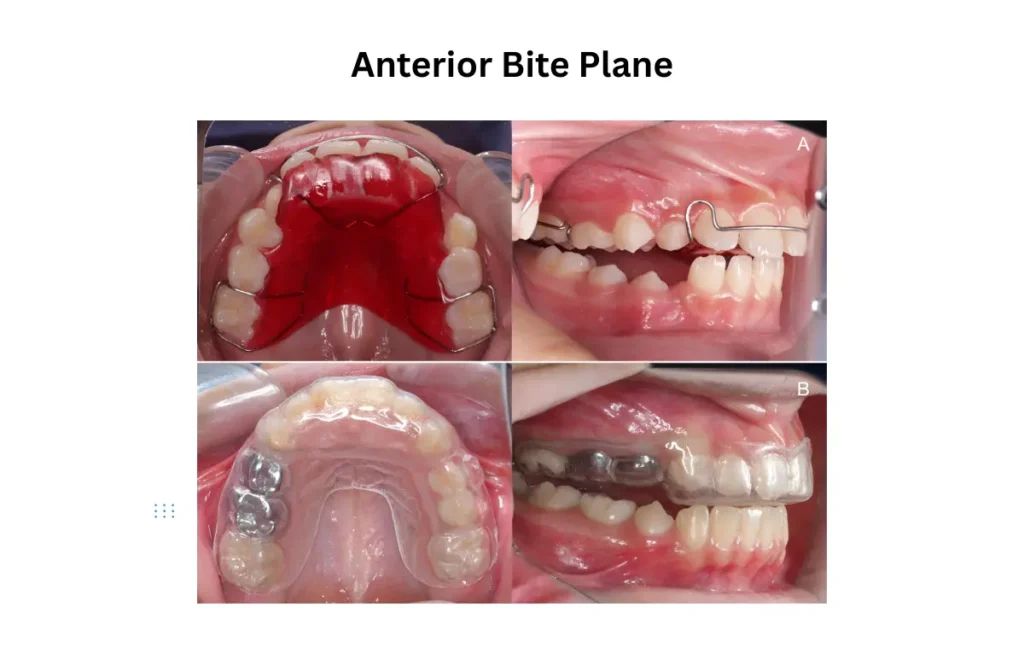
What to Expect at the Fitting Appointment
Getting an anterior bite plane made and fitted usually takes two visits:
- Records visit: Your orthodontist takes impressions or digital scans of your child’s teeth, along with photos and, if needed, X-rays to assess bite and jaw alignment.
- Fitting visit: The custom-made appliance is tried in, checked for fit and comfort, and adjusted. You’ll get specific wear-time instructions before you leave.
After that, expect a check-up every 4–6 weeks so your orthodontist can monitor progress and make small adjustments as the bite shifts.
How Long Does Treatment Take?
Most children wear an anterior bite plane for 6 to 12 months, though this varies with the severity of the bite issue and how consistently the appliance is worn. Mild cases may see improvement sooner; more pronounced deep bites or crossbites can take longer. Your orthodontist will give you a more specific estimate at your Chennai clinic visit, once they’ve assessed your child’s bite.
Caring for the Appliance
- Clean it daily with a soft toothbrush and water (avoid toothpaste, which can scratch the acrylic) or a retainer-cleaning solution as recommended by your orthodontist.
- Store it in its case whenever it’s out of the mouth — loose appliances are easily lost or damaged, especially by curious pets or younger siblings.
- Avoid hot water, which can warp the acrylic.
- Watch for cracks, rough edges, or a loose fit and contact your orthodontist promptly if you notice any — a damaged appliance can slow down treatment.
How Does an Anterior Bite Plane Compare to Other Options?
Anterior bite planes are one of several appliances used to correct bite issues in growing children:
- Anterior bite plane: Best for deep bites and certain anterior crossbites; works by disc luding the back teeth to allow jaw repositioning.
- Functional appliances (e.g., twin block): Used for broader jaw-growth guidance, often for more significant jaw discrepancies.
- Clear aligners for children: Better suited for spacing or mild alignment issues once more permanent teeth have erupted.
Your orthodontist will recommend the appliance best matched to your child’s specific bite pattern and age — an anterior bite plane isn’t a one-size-fits-all solution.
What Does It Cost?
Cost varies based on the complexity of your child’s bite and the length of treatment. As a general guide, anterior bite plane therapy is typically priced in line with other custom removable orthodontic appliances — your orthodontist can give you an exact quote after your child’s initial assessment. Many families find early intervention like this more affordable in the long run, since it can reduce the extent of orthodontic treatment needed later.
Wondering if your child needs one? Book a consultation with Dr. Roshan Rayen to get a personalized assessment and treatment timeline.
5 Benefits of Using an Anterior Bite Plane
1. Reduces Pressure on the Back Teeth
When a deep bite is left untreated, the back teeth often absorb more biting force than they should. An anterior bite plane redistributes that pressure more evenly across the jaw.
2. Corrects Deep Bites and Certain Crossbites Early
By encouraging the front teeth to meet at the correct angle, the appliance helps guide misaligned teeth into better position — particularly useful for early crossbite correction in younger children.
3. Supports Healthier Jaw Growth
A more balanced bite allows the upper and lower jaw to develop symmetrically, which can reduce the need for more extensive orthodontic work later.
4. May Ease TMJ-Related Discomfort
Because the appliance allows the jaw muscles to relax and the jaw joint (condyle) to settle into a more stable position, some children experience relief from jaw tension or clicking. Ongoing TMJ concerns should be evaluated by a specialist — learn more about our TMD Clinic.
5. Can Reduce the Need for More Complex Treatment Later
Addressing a deep bite or crossbite early, while the jaw is still growing, can sometimes simplify or shorten orthodontic treatment in the teenage years.
How Does an Anterior Bite Plane Correct Malocclusions?
When your child wears the appliance, the back teeth no longer touch when biting down. This changes the muscle activity pattern around the jaw and allows the jaw joint to settle into a more neutral position. Over weeks and months, this consistent change in bite contact encourages the back teeth to erupt slightly further and the front teeth to move into better alignment — a gradual, low-force way of correcting the bite rather than a sudden mechanical shift.
How to Use an Anterior Bite Plane
Wearing Schedule
Your orthodontist will give specific instructions, but most removable anterior bite planes are worn most of the day, including during sleep. Some orthodontists advise removing it for meals.
Building the Habit
Pairing wear-time with a predictable daily routine — after brushing, or before bed — helps children adjust faster and reduces the chance of the appliance being lost or forgotten.
Foods and Habits to Avoid
Sticky candy, hard snacks, and chewing on pens or pencils can damage or dislodge the appliance and should be avoided while it’s being worn.
Risks and Things to Watch For
Like any orthodontic appliance, an anterior bite plane needs regular monitoring:
- Over-eruption of back teeth: If worn longer than prescribed without follow-up visits, the back teeth can erupt too much, which may need to be corrected.
- Speech or eating adjustment: Some children need a few days to adjust to speaking or chewing with the appliance in place.
- Not suitable for every bite issue: An anterior bite plane treats specific types of deep bites and crossbites — it isn’t a universal fix for all malocclusions, so a proper orthodontic evaluation is essential before starting treatment.
Regular check-ups with your orthodontist are the best way to catch and adjust for these issues early.
Conclusion
An anterior bite plane is a small appliance with a meaningful job: guiding your child’s bite into a healthier position while their jaw is still developing. With consistent wear and regular orthodontist visits, it can reduce strain on the back teeth, support more balanced jaw growth, and potentially simplify orthodontic treatment down the road.
If you’d like to know whether an anterior bite plane is right for your child, book a consultation with our team at Rayen’s Dental Clinic in Nungambakkam, Chennai.
See what other parents have experienced with early orthodontic care at our clinic in our patient testimonials.
Read also: Posterior Bite Plane.


