

✔ Medically Reviewed
Reviewed by Dr. Roshan Rayen , BDS, MDS — Chief Dentist, Rayen Dental Care Centre, Chennai
Registration number 5051
25 years of postgraduate clinical experience in pediatric dentistry and orthodontics
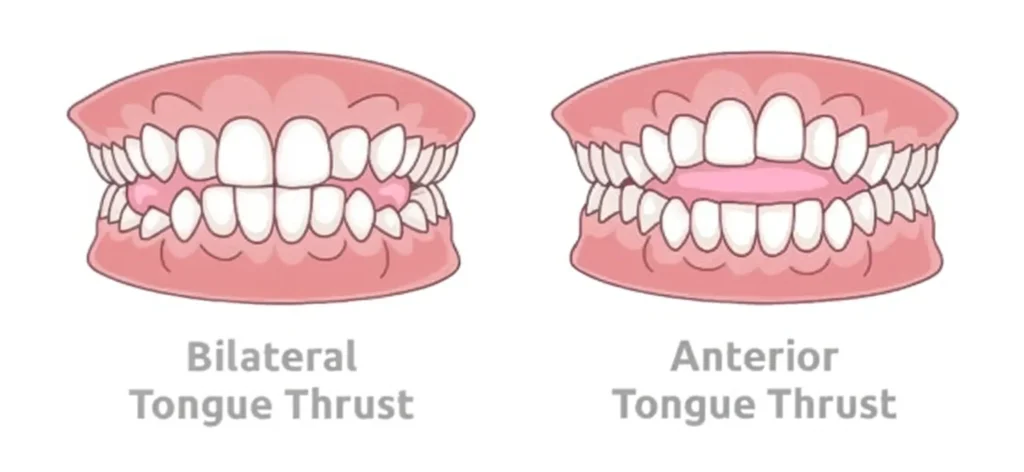
Every time we swallow, the tongue moves in a set way. In a normal adult swallow, the tip of the tongue presses against the roof of the mouth, just behind the upper front teeth. In tongue thrusting, the tongue pushes forward against or between the front teeth instead.
This may not sound like much. But a person swallows hundreds of times a day. Each time, the tongue presses on the teeth. Over months and years, this steady pressure can push the front teeth forward or apart, create a gap between the upper and lower teeth, and affect how some words sound.
Many parents notice the problem only when their child develops a lisp, when the front teeth do not meet, or when braces do not seem to hold the teeth in place. Seeing a dentist for tongue thrusting in Chennai early can help find the cause and guide the tongue back into its correct position before the teeth and jaws are affected further.
This guide explains what tongue thrusting is, the signs to look for, why it happens, how it is diagnosed and treated, and what to look for when choosing a dentist for this problem.
What is Tongue Thrusting?
Tongue thrusting, also called an orofacial myofunctional disorder or reverse swallow, is a habit where the tongue pushes forward during swallowing, speaking or even at rest.
Babies naturally swallow with their tongue forward. This is called an infantile swallow and is normal during breastfeeding and bottle feeding. As children grow and start eating solid foods, the swallow pattern slowly changes. In most children, the tongue learns to rest against the roof of the mouth by around age four to six.
In some children, this change does not happen fully. The tongue keeps pushing forward. If the habit continues as permanent teeth come in, it can affect how they line up. Tongue thrusting can also continue into adulthood, especially if it was never treated.
Signs and Symptoms of Tongue Thrusting
Tongue thrusting is not always easy to spot. Watch for these signs in your child, or in yourself:
- Tongue visible between the teeth: The tip of the tongue shows between the front teeth while talking, swallowing or resting.
- Open bite: The upper and lower front teeth do not touch when the back teeth are closed together.
- Front teeth pushed forward: The upper front teeth may flare outward or have gaps between them.
- Lisp: Sounds such as “s”, “z”, “t”, “d”, “n” and “l” may sound unclear.
- Mouth often open: The lips stay apart when the person is not talking.
- Mouth breathing: Breathing through the mouth instead of the nose, especially during sleep.
- Messy or noisy eating: Food may escape from the mouth, or swallowing may look like extra effort.
- Tight chin muscles while swallowing: The muscles around the lips and chin tighten noticeably during a swallow.
- Braces that do not hold: Teeth move back towards their old position after orthodontic treatment.
If you notice any of these, a dental check can help find out whether tongue thrusting is the cause.
What Causes Tongue Thrusting?
Tongue thrusting often has more than one cause. Common reasons include:
- Long term thumb sucking or pacifier use: Habits that continue past the toddler years can train the tongue to sit forward.
- Long term bottle feeding: Extended bottle use can keep the infantile swallow pattern going.
- Blocked nose, allergies or enlarged tonsils and adenoids: When the nose is blocked, the mouth stays open for breathing and the tongue tends to sit low and forward.
- Tongue tie: In tongue tie, also called ankyloglossia, a short or tight band of tissue under the tongue limits how far the tongue can lift.
- Weak oral muscles: The tongue, lip and cheek muscles may not work together properly.
- Large tongue: In some cases, the tongue is large compared with the space in the mouth.
- Family history: The shape of the jaws and mouth can run in families.
Finding the cause matters, because treatment works best when the reason behind the habit is also addressed.
Why Early Treatment Matters
If tongue thrusting is not treated, it can lead to:
- An open bite, where the front teeth do not meet
- Front teeth that flare forward or develop gaps
- Unclear speech that can affect a child’s confidence at school
- Trouble biting into foods such as sandwiches or fruit
- Changes in the shape of the face over time, in some cases
- Teeth moving back after braces are removed
Children’s jaws and habits are still developing, so treatment started in childhood is often simpler. Adults can also be treated, though it may take more time and steady practice to change a long standing habit.
Who Treats Tongue Thrusting?
Tongue thrusting sits at the meeting point of dentistry, breathing and speech. Depending on the cause, care may involve more than one professional:
- Pediatric dentist: Assesses children’s swallowing patterns, oral habits, bite and jaw growth, and plans habit correction and myofunctional therapy.
- Orthodontist: Corrects open bites and moved teeth with braces or aligners once the habit is under control.
- Speech therapist: Helps when speech sounds are affected.
- ENT doctor: Checks for blocked nose, enlarged tonsils or adenoids when mouth breathing is involved.
A dentist for tongue thrusting in Chennai who looks at the teeth, jaws, tongue and breathing together can coordinate this care and refer to the right professional when needed.
How Tongue Thrusting is Diagnosed
A proper assessment usually includes:
- History: Questions about feeding, thumb sucking, breathing, snoring, allergies and speech
- Watching the swallow: The dentist observes how the tongue, lips and chin move when the patient swallows water or food
- Checking the tongue at rest: Where the tongue sits when the mouth is relaxed
- Checking for tongue tie: How freely the tongue can lift and move
- Bite examination: Looking for an open bite, flared teeth or a crossbite
- Breathing check: Signs of mouth breathing and whether the nose is clear
- X-rays or scans, if needed: To study the teeth and jaw growth in more detail
When you visit a dentist for tongue thrusting in Chennai, this full assessment helps make sure the treatment plan targets the real cause, not just the visible effect on the teeth.
Treatment Options for Tongue Thrusting
Treatment is planned around the patient’s age, the cause and how much the teeth have been affected.
- Myofunctional therapy: This is a set of simple exercises that train the tongue, lips and face muscles to work correctly. The patient learns to rest the tongue on the roof of the mouth, swallow properly and keep the lips closed. Exercises are done daily at home, with regular review visits. Results depend a lot on regular practice.
- Habit correction appliances: For children, the dentist may fit a small appliance inside the mouth that gently reminds the tongue to stay back. These are usually used alongside exercises.
- Myofunctional trainers: These are soft, removable mouthpieces that are worn for short periods during the day and while sleeping. They help guide the tongue and lips into better positions.
- Tongue tie release: When tongue tie is limiting tongue movement, a minor procedure called a frenectomy can release the tight band of tissue. Dental lasers may be used for this in suitable cases. Exercises after the procedure help the tongue learn its new range of movement.
- Orthodontic treatment: If the teeth have already moved, braces or aligners can bring them back into position. This works best when the tongue habit has been corrected first, as an untreated habit can push the teeth back again after braces.
- Treating breathing problems: When a blocked nose or enlarged tonsils and adenoids are involved, the patient may be referred to an ENT doctor.
- Speech therapy: When speech is affected, a speech therapist can help with correct sound formation alongside dental treatment.
Tongue Thrusting in Adults
Tongue thrusting is often thought of as a children’s problem, but many adults have it too. It is often found when an adult starts braces or notices that their teeth have shifted after earlier orthodontic treatment.
Adults can benefit from myofunctional therapy, though changing a habit that has lasted for decades takes patience and daily effort. When needed, orthodontic treatment can then correct the position of the teeth. A retainer may also be advised to help keep the teeth stable.
Tongue Thrusting Care at Rayen Dental Care Centre
Rayen Dental Care Centre in Nungambakkam has a team of pediatric dentists with an interest in oral habits, jaw growth and airway focused care. The clinic offers myofunctional therapy, habit correction appliances, laser dentistry and orthodontic care, and works with ENT doctors when breathing problems are involved.
The clinic is accredited by NABH (National Accreditation Board for Hospitals and Healthcare Providers) under its standards for Dental Health Service Providers, certificate number D-2025-0455, valid until 12 March 2029. Pedodontics and Preventive Dentistry, and Orthodontics and Dentofacial Orthopaedics, are among the services covered.
Meet the Team
For families searching for a dentist for tongue thrusting in Chennai, the pediatric team at Rayen Dental Care Centre assesses and treats tongue thrusting in children, while the oral medicine and radiology specialists support diagnosis.
Dr. Roshan Rayen
- Qualifications: BDS, MDS, FICCDE (USA)
- Experience: 25+ years
- Designation: Pedodontist and Dental Surgeon, Director
- Area of work: Pediatric Dentistry, oral habits, early bite guidance and airway focused care
Dr. Roshan Rayen is the Director of Rayen Dental Care Centre. He studied at Madras Dental College and Meenakshi Ammal Dental College and holds an MDS in pediatric dentistry.
Much of his clinical work involves how habits such as tongue thrusting, thumb sucking and mouth breathing affect a child’s teeth and jaw growth. He assesses the swallowing pattern, tongue position, bite and breathing together, and plans care that may include myofunctional therapy, myofunctional trainers, habit correction appliances and early bite guidance. When speech or breathing is involved, he coordinates care with speech therapists and ENT doctors.
He also works in conscious sedation, has published papers on this subject in national and international journals, and conducts training programmes for dentists.

Dr. D. Manikandan
- Qualifications: BDS, MDS
- Experience: 7+ years
- Designation: Associate Pediatric Dentist
- Area of work: Pediatric Dentistry
Dr. D. Manikandan has more than seven years of experience in children’s dentistry. He assesses children with oral habits such as thumb sucking and tongue thrusting, and checks how these habits are affecting the bite and the position of the teeth.
He explains the exercises and appliances to both the child and the parents in simple words, so that practice at home becomes part of the daily routine. Regular review visits help him track progress and adjust the plan when needed.

Dr. Chandrakantha Balaraman
- Qualifications: BDS, MDS
- Experience: 5+ years
- Designation: Associate Pediatric Dentist
- Area of work: Pediatric Dentistry
Dr. Chandrakantha Balaraman has more than five years of experience in children’s dentistry. She looks closely at how oral habits affect speech and the alignment of the teeth, and guides children through habit correction with patience.
She works with families to make the exercises easy to follow at home, and refers children to a speech therapist when speech sounds need extra support.

Dr. Anunitha R
- Qualifications: MDS
- Designation: Pediatric Dentist
- Area of work: Pediatric Dentistry
Dr. Anunitha R holds an MDS in pediatric dentistry and focuses on prevention and early care. During routine checkups, she watches for early signs of tongue thrusting, such as a small open bite or the tongue showing between the teeth, so the habit can be addressed before it causes bigger changes.

Dr. Madhu Nandhini K
- Qualifications: MDS
- Designation: Pediatric Dentist
- Area of work: Pediatric Dentistry
Dr. Madhu Nandhini K holds an MDS in pediatric dentistry. She provides preventive and restorative care for children and helps identify oral habits that may affect tooth development, guiding parents on the next steps.

Dr. Bhavithra Augusthian
- Qualifications: BDS, MDS
- Experience: 7+ years
- Designation: Oral and Maxillofacial Radiologist
- Area of work: Oral Medicine and Radiology
Dr. Bhavithra Augusthian has more than seven years of experience in oral medicine and radiology. When a child or adult is being assessed for tongue thrusting, X-rays and scans may be needed to study tooth position and jaw growth. She reads these images and shares her findings with the treating dentists, which helps them plan habit correction and orthodontic treatment accurately.

Dr. Jebarani Jeevitha S
- Qualifications: MDS
- Designation: Oral and Maxillofacial Physician and Radiologist
- Area of work: Oral Diagnosis and Radiology
Dr. Jebarani Jeevitha S works in oral diagnosis and maxillofacial radiology. She supports the team with detailed imaging of the jaws and face, which helps in understanding jaw growth patterns and bite problems linked to long standing tongue habits.

How to Choose a Dentist for Tongue Thrusting in Chennai
- Look for the right training: Pediatric dentists and orthodontists have specific training in oral habits, bite problems and jaw growth.
- Ask about the assessment: The dentist should check swallowing, tongue rest position, tongue tie, bite and breathing, not just the teeth.
- Ask how the habit will be corrected: Braces alone may not hold if the tongue keeps pushing on the teeth. A good plan addresses the habit itself.
- Check for team care: Find out whether the dentist works with speech therapists and ENT doctors when needed.
- Ask about follow up: Habit correction takes time. Regular reviews help keep progress on track.
- Ask for a clear plan and cost: You should know the expected duration, number of visits and cost before starting.
Tips for Parents at Home
- Gently help your child stop thumb sucking or pacifier use after around age three or four.
- Move from bottle to cup by around the first birthday, as advised by your child’s doctor.
- Notice whether your child breathes through the mouth, especially during sleep, and mention it to your dentist or doctor.
- Encourage your child to keep their lips closed at rest.
- If exercises are given, help your child practise them every day. Short daily practice works better than long sessions once a week.
- Keep review appointments, even when progress looks good.
How to Book an Appointment
- Call +91 90038 79676 or +91 72000 96075
- WhatsApp +91 90038 79676
- Email rayendental@gmail.com
- Online form on the Contact Us page
Address: Redbricks Leela Apartments, 30/1 Tank Bund Road, Nungambakkam (near Loyola College), Chennai 600 034
Conclusion
Tongue thrusting can quietly affect the teeth, bite and speech over time. The good news is that it can often be managed, especially when the cause is found early and the habit is treated along with any changes in the teeth.
When looking for a dentist for tongue thrusting in Chennai, choose one who assesses swallowing, tongue position, breathing and bite together, works with speech therapists and ENT doctors when needed, and explains a clear plan before starting.
Rayen Dental Care Centre in Nungambakkam has a pediatric dental team with a focus on oral habits and jaw growth, along with myofunctional therapy, habit correction appliances and orthodontic care. A consultation is a simple first step to understand what is causing the habit and how it can be corrected.
Read also: Kids Early Crossbite Treatment in Chennai


